Found this while cleaning up my hard drive. It was originally intended to be published in a S/G's community newspaper, but due to your dear 窮書生's unparalleled procrastinating skill, it didn't make it to print, and I exhaled a sigh of relief :p. The words does not do justice to the beautiful music nor Joanne's wondrous talent, but at the very least it serves as a keepsake of a wonderful time that we all spend together.
.....
月光中翩翩飛舞的蝴蝶 – 記張瓊文卡內基鋼琴獨奏會
三月二十一日傍晚,擁有哥倫比亞教師學院博士學位的台灣年輕鋼琴家張瓊文(Joanne)在卡內基音樂廳威爾演奏廳舉行個人演奏會,曲目設計保持了她一貫的風格,從巴哈工整的英國組曲、德布西的『貝加馬斯組曲』、鋼琴版的『梁祝』、到最後澎湃、辛辣的普羅科耶夫,Joanne 在這次演奏會中充分的展現出她多方位的音樂才能.
所有曲目中,筆者印象最深刻的,首推德布西的『貝加馬斯組曲』.這是德布西早期的作品,譜寫於一八九零年.德布西既是法國印像樂派的代表,他的音樂首重感受與情意,給人的感覺是一種氣氛.Joanne 在節奏方面掌握的非常好,從前奏的壯麗到第三首『月光』,曲線細緻,充分捕捉到月亮那稍縱即逝,模糊朦朧的感覺.月光在最初的八小節中緩緩下降;茫漠的世界,有著柔和的光輝.最後,主題被段片般的支解,在一樣茫漠的印象中終止.
緊跟著『貝加馬斯組曲』是這次演奏會的重頭戲,由I-Lin Sun 所改編的鋼琴版『梁祝』.這個版本以一台鋼琴來表現整個交響樂團的音域,對演奏者來說是一大考驗.結構上,依舊忠於1959年的原作,大致分為呈示部(愛情主題、求學、到長亭惜別),展示部(抗婚、哭靈、投墳),到最後的再現部(化牒)。在原版中由小提琴所演湊的愛情主題,這次由鋼琴詮釋,別有一番風味。最後的投墳段落,音樂急轉而下,演奏激昂而果斷,鋼琴聲裡彷彿聽到了英台呼天嚎地,悲痛欲絕的控訴。最後,我們又聽到那段熟悉的"愛情主題"琴聲多次移調,起伏中,彷彿看到了蝴蝶在空中翩翩起舞.
Monday, January 29, 2007


Wednesday, January 24, 2007
一個父親和兒子的故事
這個父親是一位聞名世界的導演。
他的電影,陪伴了一整個時代的人的成長。只是這個父親,卻錯過了自己兒子的童年。
而兒子對父親的記憶,是用第三人稱建立起來的:
"你父親的作品真感人..."
"我是看你的父親的電影長大的..."
"真棒,我也希望有一個天才的父親..."
...
兒子長大了後,成為了一個庭園設計家,刻意的避開了父親的事業。
但創作的動力,泅在他的血液裡。這是沒有辦法改變的。
一次巧妙的機緣下,兒子在一部父親醞釀已久的電影中當上導演。
父親對公司的這個決定感到強烈的反對,毅然決然退出了這次的拍攝。父子倆在接下來的幾個月中,沒說過一句話。
...
時間快轉,電影首映結束後,兒子走上講台,準備對在場的來賓致詞。
不久前,兒子才從一位與父親共事數載的伯伯口中得知,父親來了。
雖然伯伯也說,父親在電影結束後,就走了。但他還是試著在人群中找尋父親的身影。
上台前,伯伯遞了一張紙條給他,寥寥數字,是父親的筆跡:
"拍的坦率,誠實;很好的電影。"
兒子的眼框濕了...
兒子的名字,叫宮崎吾朗。他的父親,單名一個字,"駿"。
---
This is a trailer of Studio Ghibli's latest film, called "Tales from Earthsea". The story is adopted from a popular fantasy series of the same name by Ursula Le Guin. The song played in the background is sung by Aoi Teshima. Not yet 18 when the film was made, she sang with a clean, immaculate voice that's simply mesmerizing. She's also the voice actor for the main character Therru.
瑟魯之歌 詞:宮崎吾朗 曲:谷山浩子
在近黃昏的雲層上 總是孤單飛翔著
老鷹應該很悲傷吧
在無聲無息的風中 抓住天空的它的羽翼
無法休息
把心比喻成什麼好呢 像老鷹般的這顆心
把心比喻成什麼好呢 在空中飛舞的悲傷
在細雨飄落的岩石邊 總是小小的開著
花朵應該很痛苦吧
在色彩迷濛的雨中 淺粉紅色的花瓣
無人撫摸
把心比喻成什麼好呢 像花朵般的這顆心
把心比喻成什麼好呢 受風吹雨打的苦痛
在無人煙的野徑上 和我並肩行走著
你也一定很寂寞吧
在蟲兒低喃的草原 一起前行的人們
無話可說
把心比喻成什麼好呢 單獨前往的這顆心
把心比喻成什麼好呢 孤獨一人的寂寞
他的電影,陪伴了一整個時代的人的成長。只是這個父親,卻錯過了自己兒子的童年。
而兒子對父親的記憶,是用第三人稱建立起來的:
"你父親的作品真感人..."
"我是看你的父親的電影長大的..."
"真棒,我也希望有一個天才的父親..."
...
兒子長大了後,成為了一個庭園設計家,刻意的避開了父親的事業。
但創作的動力,泅在他的血液裡。這是沒有辦法改變的。
一次巧妙的機緣下,兒子在一部父親醞釀已久的電影中當上導演。
父親對公司的這個決定感到強烈的反對,毅然決然退出了這次的拍攝。父子倆在接下來的幾個月中,沒說過一句話。
...
時間快轉,電影首映結束後,兒子走上講台,準備對在場的來賓致詞。
不久前,兒子才從一位與父親共事數載的伯伯口中得知,父親來了。
雖然伯伯也說,父親在電影結束後,就走了。但他還是試著在人群中找尋父親的身影。
上台前,伯伯遞了一張紙條給他,寥寥數字,是父親的筆跡:
"拍的坦率,誠實;很好的電影。"
兒子的眼框濕了...
兒子的名字,叫宮崎吾朗。他的父親,單名一個字,"駿"。
---
This is a trailer of Studio Ghibli's latest film, called "Tales from Earthsea". The story is adopted from a popular fantasy series of the same name by Ursula Le Guin. The song played in the background is sung by Aoi Teshima. Not yet 18 when the film was made, she sang with a clean, immaculate voice that's simply mesmerizing. She's also the voice actor for the main character Therru.
瑟魯之歌 詞:宮崎吾朗 曲:谷山浩子
在近黃昏的雲層上 總是孤單飛翔著
老鷹應該很悲傷吧
在無聲無息的風中 抓住天空的它的羽翼
無法休息
把心比喻成什麼好呢 像老鷹般的這顆心
把心比喻成什麼好呢 在空中飛舞的悲傷
在細雨飄落的岩石邊 總是小小的開著
花朵應該很痛苦吧
在色彩迷濛的雨中 淺粉紅色的花瓣
無人撫摸
把心比喻成什麼好呢 像花朵般的這顆心
把心比喻成什麼好呢 受風吹雨打的苦痛
在無人煙的野徑上 和我並肩行走著
你也一定很寂寞吧
在蟲兒低喃的草原 一起前行的人們
無話可說
把心比喻成什麼好呢 單獨前往的這顆心
把心比喻成什麼好呢 孤獨一人的寂寞
Monday, January 22, 2007
What is the Matrix Retreat?
Experiment:
1 Zen Buddhist Monk
1 Psychologist
4 dedicated counselors
some involving paricipants
a bunch of 11- to 14- year-old kids (with energy to spare)
2 days in a secluded countryside
20 degree F, with biting winds
And what do you have?
...
A retreat that suprises, perplexes, is sometimes annoying, sometimes insightful, and never, never boring.
Kudos to Pete and Kuo Jeun FaShih, who led some thoughtful discussions; to Anny and Joanne, whose charm and grace no doubt had a calming effect on the more energetic bunch; to all other volunteers, who made this retreat possible; and to the kids, always illuminating.
It was a wonderful weekend.
“The teacher who walks in the shadow of the temple, among his followers, gives not of his wisdom but rather of his faith and his lovingness.
If he is indeed wise he does not bid you enter the house of wisdom, but rather leads you to the threshold of your own mind.”
-From “The Prophet” by Khalil Gibran
1 Zen Buddhist Monk
1 Psychologist
4 dedicated counselors
some involving paricipants
a bunch of 11- to 14- year-old kids (with energy to spare)
2 days in a secluded countryside
20 degree F, with biting winds
And what do you have?
...
A retreat that suprises, perplexes, is sometimes annoying, sometimes insightful, and never, never boring.
Kudos to Pete and Kuo Jeun FaShih, who led some thoughtful discussions; to Anny and Joanne, whose charm and grace no doubt had a calming effect on the more energetic bunch; to all other volunteers, who made this retreat possible; and to the kids, always illuminating.
It was a wonderful weekend.
“The teacher who walks in the shadow of the temple, among his followers, gives not of his wisdom but rather of his faith and his lovingness.
If he is indeed wise he does not bid you enter the house of wisdom, but rather leads you to the threshold of your own mind.”
-From “The Prophet” by Khalil Gibran
Monday, January 15, 2007
周星星笑哉!
Chanced upon this on Youtube yesterday. Some of you may have seen it already, but if you haven't, it's a hell of a good laugh :).
And in response to Eatgod's recent comment (愛妳一萬年 remains my favorite line from any movie, and 朱茵 one of my favorite actresses), here's another one of his timeless jokes:
"我最近發明了一種東西,相信可以幫你。手電筒?錯!這一支不是普通的手電筒, 這一支是不需要電池的太陽能手電筒!在有光的時候它就會亮!那如果沒有光的時候......絕對不亮!有沒有可能沒有光的時候它也會亮?問得好!關燈。哪~~你拿出另外一支手電筒來照它呢,它就會亮......嘿~~怎麼樣哪?開燈!這個發明還真有創意啊!"
Sunday, January 14, 2007
雨夜
一滴..兩滴..三滴..滴滴落下來..
下雨的晚上,夜總是讓人覺得比較深。平日的矯情不在,取而代之的是更深沉,更原始的一種感觸。’君問歸期未有期,巴山夜雨漲秋池。何當共翦西窗燭,卻話巴山夜雨時。’其實,要說美,實在沒什麼美的。屋外泥擰,屋內寒氣透身。但,就在這時候,被雨聲阻隔的寂寞,讓想像變的專注,遙遠。黯淡的燈光,透過冰冷冰冷的玻璃窗﹔窗上,房裡熱氣呵成一片霧,看不遠,卻又覺得看的很深。用手指劃去窗上的霧氣,雨一滴,一滴的下。新的霧氣上來,繼續用手指劃,劃著劃著,終於劃出思念中的名字...
下雨的晚上,夜總是讓人覺得比較深。平日的矯情不在,取而代之的是更深沉,更原始的一種感觸。’君問歸期未有期,巴山夜雨漲秋池。何當共翦西窗燭,卻話巴山夜雨時。’其實,要說美,實在沒什麼美的。屋外泥擰,屋內寒氣透身。但,就在這時候,被雨聲阻隔的寂寞,讓想像變的專注,遙遠。黯淡的燈光,透過冰冷冰冷的玻璃窗﹔窗上,房裡熱氣呵成一片霧,看不遠,卻又覺得看的很深。用手指劃去窗上的霧氣,雨一滴,一滴的下。新的霧氣上來,繼續用手指劃,劃著劃著,終於劃出思念中的名字...
Monday, January 08, 2007
千江共一月

窮書生講古...
佛經"四世因果論"裡的一個故事:
話說古印度,世尊的時代。阿育王在一次盛大的宴會中邀請天下人、眾尊者共食。人群中,唯獨不見烰爐尊者。
宴會一連數天數夜。烰爐尊者一直到最後一天的晚上,眾人皆以散去的時候方到達阿育王的宮殿。
王問:『尊者為何故而遲來?』
尊者答曰:『為赴天下人之宴。』
王又問:『單身一人如何赴天下人之宴?』
烰爐尊者不說話,抬頭仰望。這時天色已晚,月明星稀。尊者做一偈答了王:
『千山同一月,萬戶盡皆春;
千山有水千江月,萬里無雲萬里天...』
-------
這就是蕭麗紅"千山有水千江月"小說書名的出處。
此書講故鄉之情,家族之情,乃至貞觀與大信的感情,無依不是細膩,縈懷。縱使結局令人覺得過於倉促,整體而言,卻是一個餘味無窮的好故事。
對這偈(ji4 or jie2?both seems to be right)的解釋,每個人,因為自己感觸與經歷的差異,一定會有所不同。這本是佛法應有的深度。有江就有水,有水就有月,月亮是緣起,倒映在水中的,是有情。他們不是對立的。
”佛如天上月,本來如如不動,不來人間,有水之處,皆現其影。佛之法身,如如不動,隨眾生心,水清見佛,應身出世。"
Monday, January 01, 2007
大觀
http://www.nytimes.com/2006/12/28/arts/design/28muse.html?_r=1&ref=arts&oref=slogin
感謝Leigo,在回紐約的前夕給我報這麼一個好料,讓我在星期五的一大早,又跑了一次士林。
這次去故宮,是帶著朝聖的心情去的。不為什麼,只因在此次「大觀」的特別展覽中,有蘇軾,更有宋人達中華文化之巔的善本書輯,書法拓本,及北宋窯器。
就如同NY Times所說的,這是一次矌世之展。故宮館藏數載不見的文物,加上世界各地博物館所借來,一次展出。因為是星期五,沒有本地的人,卻有成堆成群的日本、美國、韓國,以及大陸的觀光客。我就跟著他們,看北宋山水畫的震撼,看『雨過天青』的汝窯釉色,看宋人的煥爛書法;在蘇東坡的『書前赤壁賦』前徘徊不以,不能自己。
 宋徽宗的『瘦金體』書法。A horrendous emperor, but he sure was gifted.
 天下三大行書之一-蘇軾的寒食詩
 范寬的『谿山行旅圖』
 蘇體(以蘇軾書寫的版本所印)的妙法蓮華經

『雨過天青雲破處,者般顏色做將來
感謝Leigo,在回紐約的前夕給我報這麼一個好料,讓我在星期五的一大早,又跑了一次士林。
這次去故宮,是帶著朝聖的心情去的。不為什麼,只因在此次「大觀」的特別展覽中,有蘇軾,更有宋人達中華文化之巔的善本書輯,書法拓本,及北宋窯器。
就如同NY Times所說的,這是一次矌世之展。故宮館藏數載不見的文物,加上世界各地博物館所借來,一次展出。因為是星期五,沒有本地的人,卻有成堆成群的日本、美國、韓國,以及大陸的觀光客。我就跟著他們,看北宋山水畫的震撼,看『雨過天青』的汝窯釉色,看宋人的煥爛書法;在蘇東坡的『書前赤壁賦』前徘徊不以,不能自己。
 宋徽宗的『瘦金體』書法。A horrendous emperor, but he sure was gifted.
 天下三大行書之一-蘇軾的寒食詩
 范寬的『谿山行旅圖』
 蘇體(以蘇軾書寫的版本所印)的妙法蓮華經
『雨過天青雲破處,者般顏色做將來
Tuesday, December 26, 2006
假期
臺北,慵懶的午後,永和某個咖啡館⋯
窗外,下著細雨。就像baseball的慢動作重播一般,所有的動作慢了下來,
慢的讓人有點不能接受。
紐約十二載,自己的步調早以被設了最低速限,慢不下來。
以效率之名,速度常讓人感到渺小、無助。
如今,一場雨,
讓所有的景物都慢了下來,
Vacation... 總算有了放假的感覺。
 墾丁海邊
墾丁海邊
 很大的ㄉㄧ。ㄎㄚ,還滿好吃的。
 家前市場一景
 法鼓山,大雨中的觀音池
窗外,下著細雨。就像baseball的慢動作重播一般,所有的動作慢了下來,
慢的讓人有點不能接受。
紐約十二載,自己的步調早以被設了最低速限,慢不下來。
以效率之名,速度常讓人感到渺小、無助。
如今,一場雨,
讓所有的景物都慢了下來,
Vacation... 總算有了放假的感覺。
 墾丁海邊
墾丁海邊 很大的ㄉㄧ。ㄎㄚ,還滿好吃的。
 家前市場一景
 法鼓山,大雨中的觀音池
Saturday, December 09, 2006
My family in the U.S. - Thirty-strong and growing!

This picture was taken during Aunt Ching Ching's wedding exactly one month ago. My maternal family, the Won family, is shown here with all but two of its current members (Tom, my good gracious cousin, is currently in Taiwan, working for a software company in the HsingChu Industrial Park. HaiJiang, my ninth and final uncle-to-be, is in Shanghai, attending a Physics Conference.)
It would be great story to tell, of three generations of Won family and its journey across the sea, from my grandfather's humble beginning in Wen Zhou to a magnificent banquet in the City of New York. Alas, sleep beckons, and it'll be another story to tell in another time. Good night everyone.
Sunday, December 03, 2006
意境的片刻,化為永恆
詩人為什麼要寫詩?
最近一直在想這個問題。
古人慣把詩人叫做"騷人墨客 ",彷彿寫詩一定是先要有滿腹牢騷,才寫的出來。自己有時也不得不認同。似乎寫詩,不是矯情,就是吃飽沒事幹,自愛自憐,無病聲吟。
最近,一份奇特的緣分,生命在一天一天的過程中轉了彎,才發覺,詩,是藉由文字,將感觸及意境的片刻,化為永恆。
當然,有介於每個人的才情,背景的不同,有人看到月亮,會唱"天頂的月娘",有人會問"明月幾時有",還有人,仰頭望月,心裡想的卻是如月的佳人。
不管怎樣,只要感覺的夠深,那一個當下,就是永恆。
元 豐 六 年 十 月 十 二 日 , 夜 , 解 衣 欲 睡 , 月 色 入 戶 , 欣 然 起 行 。 念 無 與 為 樂 者 , 遂 至 承 天 寺 , 尋 張 懷 民 。 懷 民 亦 未 寢 , 相 與 步 于 中 庭 。 庭 下 如 積 水 空 明 , 水 中 藻 荇 交 橫 , 蓋 竹 柏 影 也 。 何 夜 無 月 , 何 處 無 竹 柏 , 但 少 閑 人 如 吾 兩 人 者 耳 。
漫不經心的魅力。短短數行,卻是那一瞬間心境的最佳詮釋。我想,這就是永恆吧。
祝各位,不論是在用功還是在玩,都能感覺身邊不經意的美好。只要有心,任何一刻,都是詩。
最近一直在想這個問題。
古人慣把詩人叫做"騷人墨客 ",彷彿寫詩一定是先要有滿腹牢騷,才寫的出來。自己有時也不得不認同。似乎寫詩,不是矯情,就是吃飽沒事幹,自愛自憐,無病聲吟。
最近,一份奇特的緣分,生命在一天一天的過程中轉了彎,才發覺,詩,是藉由文字,將感觸及意境的片刻,化為永恆。
當然,有介於每個人的才情,背景的不同,有人看到月亮,會唱"天頂的月娘",有人會問"明月幾時有",還有人,仰頭望月,心裡想的卻是如月的佳人。
不管怎樣,只要感覺的夠深,那一個當下,就是永恆。
一0八四年,蘇東坡羈旅黃州,烏台詩案的餘震未去,他卻在這片貧瘠的土地,看到平淡的幸福。刻薄的筆勢不在,取而代之的,是光輝,溫暖,成熟的豁達。大約在這個時候,蘇東坡寫下了前後赤壁賦,以及一篇較少人知道的短記,’記承天夜遊’。因為篇幅的限制,赤壁賦是講不來的 (應該有人已經看不下去了吧:))但一篇短記倒是可以:
元 豐 六 年 十 月 十 二 日 , 夜 , 解 衣 欲 睡 , 月 色 入 戶 , 欣 然 起 行 。 念 無 與 為 樂 者 , 遂 至 承 天 寺 , 尋 張 懷 民 。 懷 民 亦 未 寢 , 相 與 步 于 中 庭 。 庭 下 如 積 水 空 明 , 水 中 藻 荇 交 橫 , 蓋 竹 柏 影 也 。 何 夜 無 月 , 何 處 無 竹 柏 , 但 少 閑 人 如 吾 兩 人 者 耳 。
漫不經心的魅力。短短數行,卻是那一瞬間心境的最佳詮釋。我想,這就是永恆吧。
祝各位,不論是在用功還是在玩,都能感覺身邊不經意的美好。只要有心,任何一刻,都是詩。
Saturday, December 02, 2006
造句
妹妹的中文功課開始有造句練習。
禮拜四,母親跟妹妹坐在書桌前,準備又一個長期抗戰。
第一個詞:媽媽
妹:媽咪,這個要怎麼做啊?
媽:(想了一下)妳可以寫"我媽媽好漂亮喔!"
妹妹聽了,一時沒有反應。她斜著頭,彷彿陷入了很深的思考...
-
妹:"我.媽.媽.好.胖.喔.!"
@#$%^&*()...
唉呀,有人皮在癢了。: )
 上個月生日,與家人一同吹 "蛋糕"
禮拜四,母親跟妹妹坐在書桌前,準備又一個長期抗戰。
第一個詞:媽媽
妹:媽咪,這個要怎麼做啊?
媽:(想了一下)妳可以寫"我媽媽好漂亮喔!"
妹妹聽了,一時沒有反應。她斜著頭,彷彿陷入了很深的思考...
-
妹:"我.媽.媽.好.胖.喔.!"
@#$%^&*()...
唉呀,有人皮在癢了。: )
 上個月生日,與家人一同吹 "蛋糕"
Thursday, November 23, 2006
Charlotte, Thanksgiving, 及其它
Your dear working stiff has been quite occupied of late.
It's hard to pinpoint the exact source of my preoccupation. For reasons unbeknownst to me, I can't seem to sit down and just write something. Even now, writing this long-overdue blog, I felt the strongest urge to just stop and go back to my little wonderland of reading and aimless daydreaming.
But back to the topic of this blog. About 3 weeks ago, I took my very first business trip down toCharlotte , North Carolina
Yesterday was Thanksgiving. I came across an article last week that describes an French newspaper clipping from long ago that tries to explain Thanksgiving, Continental style. Besides a short and comical portrait of the Pelerins and their first year in Plymouth, the clipping concludes (originally in French, of-course),
"And so, on the fourth Thursday in November, American families sit down at a large table brimming with tasty dishes and, for the only time during the year, eat better than the French do."
:)
(Have to agree with this French dude here, after the feast we've had yesterday.)
For the record, and in the spirit of le Jour de Merci Donnant, I'd like to thank my family and my friends, for who I was, who I am, and who I can become. And last but not least, thanks also to Mr. T.S. Eliot, whose poetry proves yet again, that there can be magic in words.
Good night.
"With the drawing of this Love and the voice of this
Calling,
We shall not cease from exploration
And the end of all our exploring
Will be to arrive where we started
And know the place for the first time."
- From "Little Gidding" by T.S. Eliot.
 A picture of the trading floor viewed from above.
It's hard to pinpoint the exact source of my preoccupation. For reasons unbeknownst to me, I can't seem to sit down and just write something. Even now, writing this long-overdue blog, I felt the strongest urge to just stop and go back to my little wonderland of reading and aimless daydreaming.
But back to the topic of this blog. About 3 weeks ago, I took my very first business trip down to
It was a jam-packed 4-day trip of conferences, speaker series, business modules, and networking events.
New hirees from Corporate and Investment banking were introduced to many of our senior leaderships, including our CFO, J. Alphin; J. Martin, our corporate treasurer (who manage the bank's balance sheet. That's ALOT of money!) and of course, Ken Lewis, the Chairman and CEO of Bank of
Yesterday was Thanksgiving. I came across an article last week that describes an French newspaper clipping from long ago that tries to explain Thanksgiving, Continental style. Besides a short and comical portrait of the Pelerins and their first year in Plymouth, the clipping concludes (originally in French, of-course),
"And so, on the fourth Thursday in November, American families sit down at a large table brimming with tasty dishes and, for the only time during the year, eat better than the French do."
:)
(Have to agree with this French dude here, after the feast we've had yesterday.)
For the record, and in the spirit of le Jour de Merci Donnant, I'd like to thank my family and my friends, for who I was, who I am, and who I can become. And last but not least, thanks also to Mr. T.S. Eliot, whose poetry proves yet again, that there can be magic in words.
Good night.
"With the drawing of this Love and the voice of this
Calling,
We shall not cease from exploration
And the end of all our exploring
Will be to arrive where we started
And know the place for the first time."
- From "Little Gidding" by T.S. Eliot.
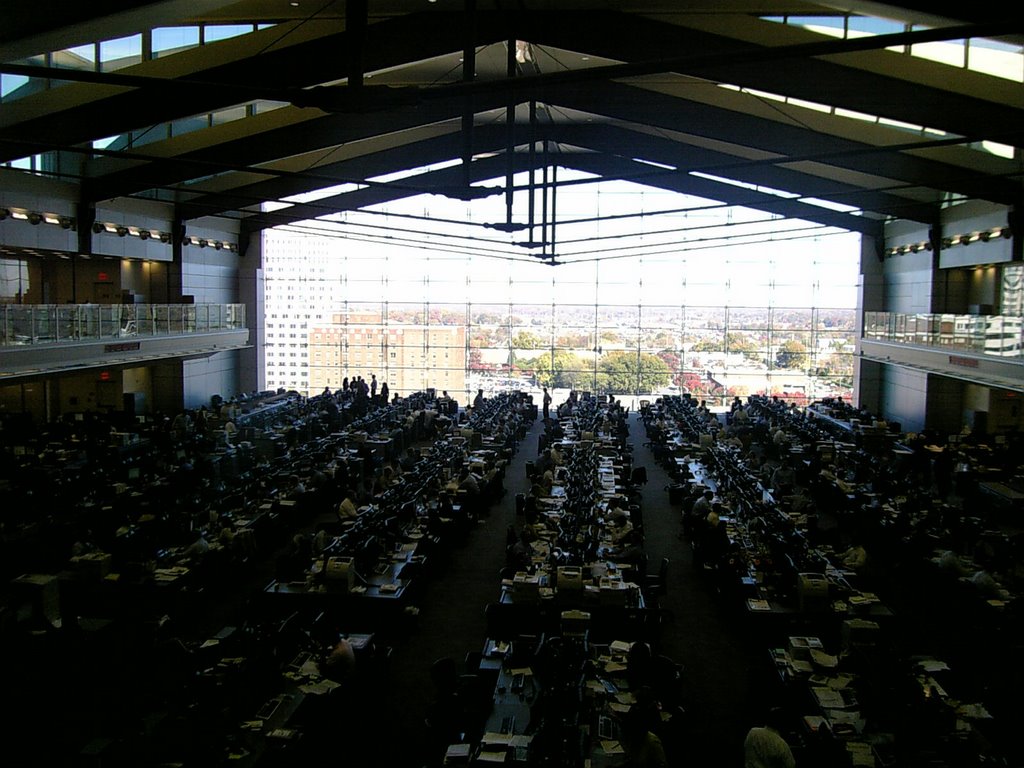 A picture of the trading floor viewed from above.
Sunday, July 16, 2006
Cephalopod Dispelled!
In lieu of the ambiguation that took place recently surrounding octopus, squid, and cuttlefish, 窮書生 had decided to be the nerdy one (as always) and take upon himself to sort out the mumble jumble. So here it is, brace yourself for some seriously boring stuff.

Octopus (章魚), a class Cephalopod of the order Octopoda, is a boneless invertebrate characterized by eight arms with suction cups, a large head, and a beak-like mouth that is the only solid part of its body.

Squid (魷魚), a class Cephalopod of the order Teuthida, has eight arms but also scores two large tentacles. A squid also uses a beak-like mouth to feed and can eject a smoke of black ink to protect itself, similar to an octopus.

Cuttlefish (墨魚, 花枝, 烏賊), a class Cephalopod of the order Sepiida, is similar to squid in body structure but are generally smaller and carries internal shell.
So what is the kraken (in Pirates of the Carribeans)?
From above description, we can conclude that the kraken belongs to neither of the three orders. It has eight arms and 2 tentacles, so that comes from the squid; it has a soft, boneless structure similar to octopus; and its toothy, maw-like mouth comes from that sand beast at the beginning of Return of the Jedi .
Octopus are perhaps the most intelligent of all invertebrate. Study shows that they are capable of solving complex puzzles, retain both short-term and long-term memories, and when kept as pet can often break out of the aquarium by practice and gile.

In terms of size, the biggest known giant octopus weighted about 600 pouds, and has arms that averaged 5 meters. The largest giant squid currently known is 8.56 meters long, and is currently been preserved in the Natural History Museum in London.
And that concludes it, thank you all staying through this!

Octopus (章魚), a class Cephalopod of the order Octopoda, is a boneless invertebrate characterized by eight arms with suction cups, a large head, and a beak-like mouth that is the only solid part of its body.

Squid (魷魚), a class Cephalopod of the order Teuthida, has eight arms but also scores two large tentacles. A squid also uses a beak-like mouth to feed and can eject a smoke of black ink to protect itself, similar to an octopus.

Cuttlefish (墨魚, 花枝, 烏賊), a class Cephalopod of the order Sepiida, is similar to squid in body structure but are generally smaller and carries internal shell.
So what is the kraken (in Pirates of the Carribeans)?
From above description, we can conclude that the kraken belongs to neither of the three orders. It has eight arms and 2 tentacles, so that comes from the squid; it has a soft, boneless structure similar to octopus; and its toothy, maw-like mouth comes from that sand beast at the beginning of Return of the Jedi .
Octopus are perhaps the most intelligent of all invertebrate. Study shows that they are capable of solving complex puzzles, retain both short-term and long-term memories, and when kept as pet can often break out of the aquarium by practice and gile.
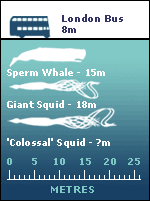
In terms of size, the biggest known giant octopus weighted about 600 pouds, and has arms that averaged 5 meters. The largest giant squid currently known is 8.56 meters long, and is currently been preserved in the Natural History Museum in London.
And that concludes it, thank you all staying through this!
Thursday, June 08, 2006
Position determined!
Just got an email today from BoA with the assignment of my first rotation. I'll be working in Liquid Product (whatever that is!) in the Global Middle Office. The office is located on 49th St and Broadway. Here is a description from Employee's website:
Description:
This is a great opportunity for someone looking to gain experience in the world of global foreign exchange. The analysts will gain exposure in the following departments:
- FX Option Trade Support
- FX Option P&L
- FX P&L
Responsibilities include performing GFX functions such as generating reports, performing P&L and reconciliation functions and using Murex and Sierra for FX and FX Option transactions.
Daily tasks include the accurate and timely entry of information, maintaining productivity levels and ensuring deadlines are kept. The successful candidate will be expected to work on projects as assigned while keeping up with daily responsibilities.
Competencies/Skills Analyst will develop during their rotation:
- Basic knowledge of the products (FX, derivative)
o Understanding of Trading and Sales practices
o Understanding of the both front end and back end of GFX
o Knowledge of the P&L concept and reconciliation
I guess it's official now - 窮書生 is 窮書生 no more. But what should I call myself from now on? Working stiff is not a bad alternative - but it doesn't convey the sense of futility and self-deprecating pride that made 窮書生 such an unique existence in any society. Hmmm, what a pickle!
For today's post, I'm putting up a poem I'd written for the TC mother's day performance. Most of you have already heard it. In fact, most of you may have heard it too many times. The poem was written over a 720-ml bottle of Chukubei Sake, a pack of Skittles, and a few slices of Gouda Cheese. Personally I much prefer those passages about 生命的母親 than those about 慧命的母親. I've never met Master, and until I do I know I'll never be able to accurately capture her radiance in words. All these flowery words in the end meant nothing, sadly. It's tough writing for an audience.
母親
我有一位生命的母親
溫柔如春雨,她的笑容是雨後的虹
堅強似大樹,她的雙臂是捧月的星
我有,我有一位慧命的母親
莊嚴如晨曦,她的聲音是涓涓水聲
崇高似明月,她的顏容是莽莽大地
生命的母親
您的柔光
來自心中的太陽
照亮歸途
遊子的鄉愁在您的方向
慧命的母親
您的悲懷
來自救贖的渴望
菩薩的願
蒼生的苦您的肩上扛
我在心中慢慢的想-
生命初生時恩情
我在心中遍遍的唱-
生命再生時的法喜
於是,在這感恩的五月天裡
從我迴腸深處 我想
對生命的母親說-
對慧命的母親說-
對天下所有的母親說-
"一片葉子,包含了它對根的情誼
一首頌歌,代表了我對您的敬愛
祝您心中的花永遠盛開
祝您付出的愛永留人世."
Description:
This is a great opportunity for someone looking to gain experience in the world of global foreign exchange. The analysts will gain exposure in the following departments:
- FX Option Trade Support
- FX Option P&L
- FX P&L
Responsibilities include performing GFX functions such as generating reports, performing P&L and reconciliation functions and using Murex and Sierra for FX and FX Option transactions.
Daily tasks include the accurate and timely entry of information, maintaining productivity levels and ensuring deadlines are kept. The successful candidate will be expected to work on projects as assigned while keeping up with daily responsibilities.
Competencies/Skills Analyst will develop during their rotation:
- Basic knowledge of the products (FX, derivative)
o Understanding of Trading and Sales practices
o Understanding of the both front end and back end of GFX
o Knowledge of the P&L concept and reconciliation
I guess it's official now - 窮書生 is 窮書生 no more. But what should I call myself from now on? Working stiff is not a bad alternative - but it doesn't convey the sense of futility and self-deprecating pride that made 窮書生 such an unique existence in any society. Hmmm, what a pickle!
For today's post, I'm putting up a poem I'd written for the TC mother's day performance. Most of you have already heard it. In fact, most of you may have heard it too many times. The poem was written over a 720-ml bottle of Chukubei Sake, a pack of Skittles, and a few slices of Gouda Cheese. Personally I much prefer those passages about 生命的母親 than those about 慧命的母親. I've never met Master, and until I do I know I'll never be able to accurately capture her radiance in words. All these flowery words in the end meant nothing, sadly. It's tough writing for an audience.
母親
我有一位生命的母親
溫柔如春雨,她的笑容是雨後的虹
堅強似大樹,她的雙臂是捧月的星
我有,我有一位慧命的母親
莊嚴如晨曦,她的聲音是涓涓水聲
崇高似明月,她的顏容是莽莽大地
生命的母親
您的柔光
來自心中的太陽
照亮歸途
遊子的鄉愁在您的方向
慧命的母親
您的悲懷
來自救贖的渴望
菩薩的願
蒼生的苦您的肩上扛
我在心中慢慢的想-
生命初生時恩情
我在心中遍遍的唱-
生命再生時的法喜
於是,在這感恩的五月天裡
從我迴腸深處 我想
對生命的母親說-
對慧命的母親說-
對天下所有的母親說-
"一片葉子,包含了它對根的情誼
一首頌歌,代表了我對您的敬愛
祝您心中的花永遠盛開
祝您付出的愛永留人世."
Monday, June 05, 2006
重逢
事情發生在電光火石之間,在春夏交接的季節裡‧‧‧
我深信我倆是一見鍾情。那年,我少不更事,在異國的土地上做著故鄉的夢。而你,始終如斯的你,卻是成長在New Orleans,及萬人寵愛於一身。邂逅的那一日,我不記得風是在哪一個方向吹,我是在夢裡,在你的懷裡依迴。之後,你,在家巷口不遠處定居,我也成了你的常客。但,就像所有美麗的夢一般,一個細雨微飄的清晨,你走了。
我不斷的找,在街角,在大路。困惑的城市裡,我尋找著你的蹤跡。But like all things, it is those we love and should know who elude us. And the moon never beams without bringing me dreams of you, and the stars never rise but I see your radiant eyes shines like Time Square lights. Slowly, painfully, the thought of you fades, the tastes of your essence cedes into a corner of my heart. Days, weeks, monthes passed by, until one day, unexpectedly, I saw you, on the corner between 14th Street and 5Th, I saw you:
"Popeyes Grand Opening Special!"
"A 2-piece chicken meal with one side order and one medium drink for only $2.99!"
啊!我是在夢裡,在夢的懷裡依回‧‧‧‧好吃!
(五月中,與友人於哥大聽佛學演講。事後同于甄及趙伯伯遊於十四街上,見Popeyes Fried Chicken 開張之慶,大喜,特記於此。)
我深信我倆是一見鍾情。那年,我少不更事,在異國的土地上做著故鄉的夢。而你,始終如斯的你,卻是成長在New Orleans,及萬人寵愛於一身。邂逅的那一日,我不記得風是在哪一個方向吹,我是在夢裡,在你的懷裡依迴。之後,你,在家巷口不遠處定居,我也成了你的常客。但,就像所有美麗的夢一般,一個細雨微飄的清晨,你走了。
我不斷的找,在街角,在大路。困惑的城市裡,我尋找著你的蹤跡。But like all things, it is those we love and should know who elude us. And the moon never beams without bringing me dreams of you, and the stars never rise but I see your radiant eyes shines like Time Square lights. Slowly, painfully, the thought of you fades, the tastes of your essence cedes into a corner of my heart. Days, weeks, monthes passed by, until one day, unexpectedly, I saw you, on the corner between 14th Street and 5Th, I saw you:
"Popeyes Grand Opening Special!"
"A 2-piece chicken meal with one side order and one medium drink for only $2.99!"
啊!我是在夢裡,在夢的懷裡依回‧‧‧‧好吃!
(五月中,與友人於哥大聽佛學演講。事後同于甄及趙伯伯遊於十四街上,見Popeyes Fried Chicken 開張之慶,大喜,特記於此。)
Monday, April 03, 2006
Another 2-hour wait, another x-ray.....
"Mr. Won, congratulation! It appears that there's no fracture.." O. K.....
"....However, the contusion was pretty severe and your talofibular ligament.." what?
".... is bruised. No hard cast is necessary, instead we'll just put it in a softcast with braces."
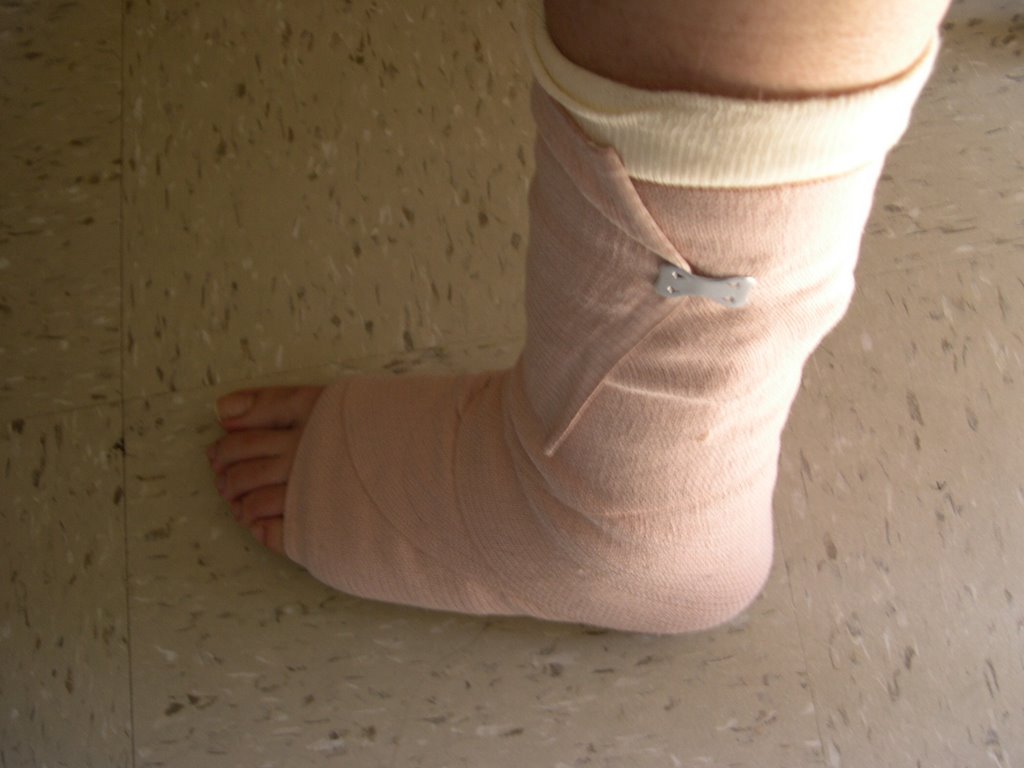
Well, in a nutshell, guys, I think I'd sprained my ankle.
It's funny, how things can often take unexpected turns. On Friday night (well actually it was Saturday morning, at 3AM) I wrote 生命會在一天天地過活下轉彎。And then, Saturday came along, I ran into a wall, visited the emergecy room, and gave up my Tibetan trip. Sunday, another doctor called with the news of a possible fracture. At the urge of my mom, I canceled my ticket to Taiwan. Monday, the injury was finally confirmed to be no more than a contusion, and I'd notified my supervisor that I'd work at my current job until the beginning of June. 也罷,"山窮水復疑無路,柳暗花明又一村"
To my friends and family: thanks, thanks for everything.
"Mr. Won, congratulation! It appears that there's no fracture.." O. K.....
"....However, the contusion was pretty severe and your talofibular ligament.." what?
".... is bruised. No hard cast is necessary, instead we'll just put it in a softcast with braces."
Well, in a nutshell, guys, I think I'd sprained my ankle.
It's funny, how things can often take unexpected turns. On Friday night (well actually it was Saturday morning, at 3AM) I wrote 生命會在一天天地過活下轉彎。And then, Saturday came along, I ran into a wall, visited the emergecy room, and gave up my Tibetan trip. Sunday, another doctor called with the news of a possible fracture. At the urge of my mom, I canceled my ticket to Taiwan. Monday, the injury was finally confirmed to be no more than a contusion, and I'd notified my supervisor that I'd work at my current job until the beginning of June. 也罷,"山窮水復疑無路,柳暗花明又一村"
To my friends and family: thanks, thanks for everything.
Sunday, April 02, 2006
Is it broken, or not broken?
Two doctors, two different opinions...
Last night, after a 3-hour, 2-hospital ordeal, I was relieved when the on-duty doctor at the downtown hospital told me that my bones look fine, it's just a pretty serious contusion that should go away in less than a week.
This morning however, another doctor called in with a slightly different diagnosis: "it appears that there's fracture in your left ankle. You'd need to see a orthopedist to determine the extent of the damage. A hard cast may be necessary."
So what shall it be? Well I guess I'll have to find out on Monday.
It's pretty incredible, really, to have your bone broken over basketball. The silver lining, though, is that now I won't have to worry about not having time for my papers and books. I guess everything happens for a reason.
Many thanks for your kind words and care, guys. I'll keep you guys updated.

Last night, after a 3-hour, 2-hospital ordeal, I was relieved when the on-duty doctor at the downtown hospital told me that my bones look fine, it's just a pretty serious contusion that should go away in less than a week.
This morning however, another doctor called in with a slightly different diagnosis: "it appears that there's fracture in your left ankle. You'd need to see a orthopedist to determine the extent of the damage. A hard cast may be necessary."
So what shall it be? Well I guess I'll have to find out on Monday.
It's pretty incredible, really, to have your bone broken over basketball. The silver lining, though, is that now I won't have to worry about not having time for my papers and books. I guess everything happens for a reason.
Many thanks for your kind words and care, guys. I'll keep you guys updated.
豬腳粽,豬腳粽,燒豬腳粽!
Saturday, April 01, 2006
戀戀風塵 (侯孝賢 movie 隨想, series #2)
A little music...
長鏡頭下的九份,山洞過了還是山;繁華落盡,九份的礦山走出生活,走入歷史。
阿遠與阿雲,在這裡長大。
相戀於這塊土地上,他們來到城市。
他們很年輕,不知道生命會在一天天地過活下轉彎。
......
阿遠要去當兵。
「執子之手,與子偕老』
面對著將來的不可知,他倆只好用著他們唯一知道的方式面對
期待與等待
時間像雨,一滴 兩滴 三滴 滴滴落下來
......
從失望到漠然,路有多長,直到番薯落土發芽,才知是生命的歷程。
阿遠從"兵變"回復,再次回到家鄉,與阿公一起看番薯田。
阿公說,這批番薯初種,要雨沒雨,又遭颱風。
阿遠說,長大了會很美。
......
說起來還是得怪自己。
明明沒那本事,還學人家搞連載,結果,轉眼以匆匆一個月。當時看的感想、心得,忘的忘,丟的丟,剩下的,只有幾個片段的印象。
總結對電影的感想,只有一個字:"美"
辛樹芬美,九份美,阿遠和阿雲的愛情美,他們的分離更美。
『淡極使之花更艷的含蓄』
這就是"吃不到的西瓜最甜"的心理情節。
晚安!
Tuesday, March 28, 2006
葬心
蝴蝶兒飛去,心亦不在
淒清長夜誰來,拭淚滿腮
是貪點兒依賴,貪一點兒愛
舊緣該了難了,換滿心哀
怎受的住,這頭猜、那邊怪
人言匯成愁海,辛酸難捱
天給的苦,給的災、都不怪
千不該、萬不該,芳華怕孤單
林花兒謝了,連心也埋
他日春燕歸來,身何在 ──「葬心」
阮玲玉從十六歲投入影壇,到二十五歲去世,在不到十年的時間裡,拍了二十九部電影。
二十五歲時因個人不幸的愛情與婚姻問題,以及一些輿論的惡意毀謗,使她憤然吞服安眠藥自殺,並留下了「人言可畏」四字遺言。
一個禮拜前,把電影看了。聽著黃鶯鶯所演唱的「葬心」,心裡很難過。難過一具美好而又速逝的生命;難過她走不出世情的羈絆;難過一整個社會,以它不容異議的力量,否決了一個人的價值;難過,難過是什麼情況,讓一個人別無選擇,只有死。
腦海裡不斷浮現的是阮玲玉演出「新女性」時,“我要活!我要活!“的悽厲叫吼,以及最後一幕當她死意已決,輕歌曼舞聲中,心裡說著〝我好快樂〞
王國維曾經把悲劇分為三種:第一種,「由極惡之人,極其所有之能力,以交構之者」。 第二種,「由於盲目的運命者」。第三種,「由於劇中人物之位置及關係而不得不然者;非必有蛇蠍之性質,與意外之變故也,但由普通之人物,普通之境遇,逼之不得不如是;彼等明知其害,交施之而交受之,各加以力而各不任」阮玲玉的遭遇,是第三種,也是最讓人心痛的一種。
「貪一點依賴貪點愛......」唉!
淒清長夜誰來,拭淚滿腮
是貪點兒依賴,貪一點兒愛
舊緣該了難了,換滿心哀
怎受的住,這頭猜、那邊怪
人言匯成愁海,辛酸難捱
天給的苦,給的災、都不怪
千不該、萬不該,芳華怕孤單
林花兒謝了,連心也埋
他日春燕歸來,身何在 ──「葬心」
阮玲玉從十六歲投入影壇,到二十五歲去世,在不到十年的時間裡,拍了二十九部電影。
二十五歲時因個人不幸的愛情與婚姻問題,以及一些輿論的惡意毀謗,使她憤然吞服安眠藥自殺,並留下了「人言可畏」四字遺言。
一個禮拜前,把電影看了。聽著黃鶯鶯所演唱的「葬心」,心裡很難過。難過一具美好而又速逝的生命;難過她走不出世情的羈絆;難過一整個社會,以它不容異議的力量,否決了一個人的價值;難過,難過是什麼情況,讓一個人別無選擇,只有死。
腦海裡不斷浮現的是阮玲玉演出「新女性」時,“我要活!我要活!“的悽厲叫吼,以及最後一幕當她死意已決,輕歌曼舞聲中,心裡說著〝我好快樂〞
王國維曾經把悲劇分為三種:第一種,「由極惡之人,極其所有之能力,以交構之者」。 第二種,「由於盲目的運命者」。第三種,「由於劇中人物之位置及關係而不得不然者;非必有蛇蠍之性質,與意外之變故也,但由普通之人物,普通之境遇,逼之不得不如是;彼等明知其害,交施之而交受之,各加以力而各不任」阮玲玉的遭遇,是第三種,也是最讓人心痛的一種。
「貪一點依賴貪點愛......」唉!
Wednesday, February 15, 2006
Cafe Lumiere (侯孝賢 movie 隨想, series #1)
In the past 2 weeks I've started a 侯孝賢 marathon, largely out of boredom, and watched through all of his films that are in my possession (風櫃來的人, 冬冬的假期, 同年往事, 戀戀風塵, 戲夢人生, 悲情城市, 海上花, 最好的時光, and Cafe Lumiere). This post is part of a series of posts that are aim to say something about these films . These are not meant to movie reviews, for reviews are meant to be read by people who hasn't seen the film, has the intention of seeing it, and are in the position to be convince/deter as such. No, these are meant simply to be documentions of feeling; thoughts, emotions at that particular moment, when one is "hit", when the meeting of minds strikes spark.

Cafe Lumiere (台譯:咖啡時光) is a film directed by 侯孝賢. Set in modern Tokyo, the film tells the story of Yoko, a freelance writer witha strong interest in Taiwanese contemporary art. Even without knowing who the director is, one can immediately sense Hou's presence in the first scene, with Yoko hanging her clothes and camera positioned, as in of Hou's films, from a distance, stantionery, much like a silent observer. There is essentially no plot, no intro, no climax, no resolution; everythin flows in a free, nonchalant way, like a mountain stream in the fall. So, my friend, you'd ask, why do I spend time talking about this movie? Strangely, dull as it is, I found a certain sense of resonance with the film. It's like a meditative poetry - slow, graceful, tinged with melancholy for past bygone, hesitant present, and unknown future. These people led small, comparably insignifigant lives, yet beauty resides in their everyday passing. Hajime, Yoko's friend and who is clearly in love with her, is putting forth an elaborate computer project about the city's train system. What is it about train lines that are so fascinating? Because they cross, but never touching.
As usual, I'd like to end the post with a poem. So let's see..... 范仲淹的蘇幕遮好了. 此詞目觸秋色, 描寫著范文正公因景觸情的心事. 前段寫景, '翠' '碧' 兩字道出了秋來蕭瑟. '山映斜陽天接水' 及後兩句是超妙之筆; 山水無言, 卻又包含了千言萬語. 後段說情, 將故國之思及羈旅之痛緊緊扣住. '愁腸' , '相思淚' 一句, 更是款款深情:
蘇幕遮 范仲淹
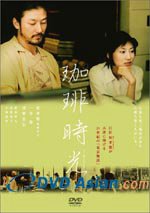
Cafe Lumiere (台譯:咖啡時光) is a film directed by 侯孝賢. Set in modern Tokyo, the film tells the story of Yoko, a freelance writer witha strong interest in Taiwanese contemporary art. Even without knowing who the director is, one can immediately sense Hou's presence in the first scene, with Yoko hanging her clothes and camera positioned, as in of Hou's films, from a distance, stantionery, much like a silent observer. There is essentially no plot, no intro, no climax, no resolution; everythin flows in a free, nonchalant way, like a mountain stream in the fall. So, my friend, you'd ask, why do I spend time talking about this movie? Strangely, dull as it is, I found a certain sense of resonance with the film. It's like a meditative poetry - slow, graceful, tinged with melancholy for past bygone, hesitant present, and unknown future. These people led small, comparably insignifigant lives, yet beauty resides in their everyday passing. Hajime, Yoko's friend and who is clearly in love with her, is putting forth an elaborate computer project about the city's train system. What is it about train lines that are so fascinating? Because they cross, but never touching.
As usual, I'd like to end the post with a poem. So let's see..... 范仲淹的蘇幕遮好了. 此詞目觸秋色, 描寫著范文正公因景觸情的心事. 前段寫景, '翠' '碧' 兩字道出了秋來蕭瑟. '山映斜陽天接水' 及後兩句是超妙之筆; 山水無言, 卻又包含了千言萬語. 後段說情, 將故國之思及羈旅之痛緊緊扣住. '愁腸' , '相思淚' 一句, 更是款款深情:
蘇幕遮 范仲淹
碧雲天
黃葉地
秋色連波
波上寒煙翠
山映斜陽天接水
芳草無情
更在斜陽外
暗鄉魂
追旅思
夜夜除非
好夢留人睡
明月樓高休獨倚
酒入愁腸
化作相思淚
Subscribe to:
Posts (Atom)